



Oscars’ New Rules: Only the Heavy and Homely Need Apply for Best Picture Glory
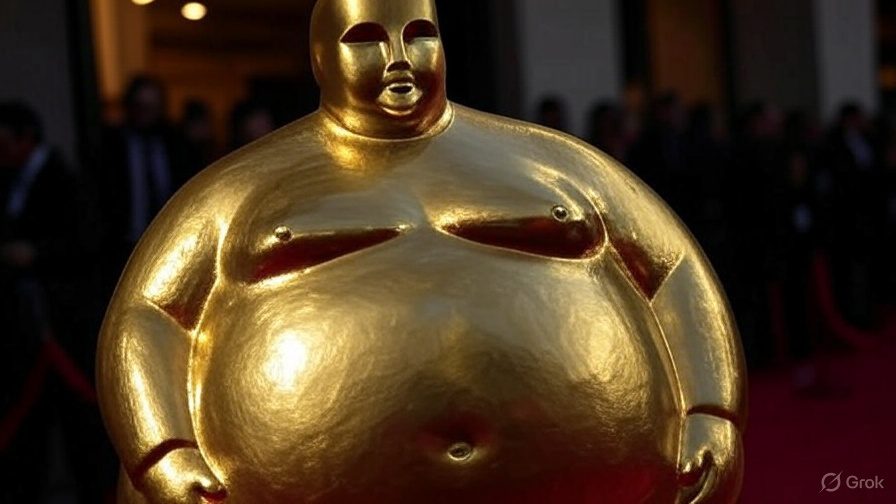
Bias: Center
Quick Take
- The Oscars have added “morbidly obese” and “aesthetically unpleasing” to their Best Picture inclusion standards.
- Films must now feature a lead or key supporting role meeting one of these criteria to be eligible.
- Academy execs claim it’s about “equity,” but producers are furious and slashing budgets.
- Audiences are ditching theaters, citing popcorn as the only reason to show up.
Big and Beautiful
Pucker up, movie buffs, because the Academy of Motion Picture Arts and Sciences just threw a Molotov cocktail at what’s left of Hollywood’s charm. Their Representation and Inclusion Standards (RAISE) for Best Picture eligibility already had filmmakers jumping through hoops, requiring two out of four diversity checkboxes to be ticked.
These include casting lead or supporting actors from underrepresented groups, like African American, Hispanic, Indigenous, or Southeast Asian, or ensuring your crew isn’t just a sea of pale dudes in cargo shorts. Plus, films must linger in theaters longer than your uncle’s conspiracy rants at Thanksgiving.
But the Academy, in a move that screams “we hate fun,” has cranked the absurdity to eleven by adding two new standards: morbidly obese (people of excess weight) and aesthetically unpleasing (ugly folks). That’s right, to even dream of Oscar gold, every Best Picture contender must now feature a main character or key supporting role who either needs a reinforced chair or makes the makeup team weep. The Academy swears this isn’t a prank, insisting it’s about “reflecting the diverse global population.” Sure, and I’m the next James Bond.
Picture the scene: Oscar execs, holed up in a vegan café, agonizing over how to make movies less watchable. After downing too many matcha shots, they decided mandating “heavy or homely” was the key to equity. “It’s not a decision we took lightly,” one exec whispered, probably while clutching a kale smoothie. Meanwhile, producers are losing it. Some are quitting altogether, with one overheard muttering, “I’m not casting someone who breaks the set or scares the extras!” Others are slashing budgets faster than a slasher flick villain, as audiences with actual taste “retire” to their Netflix queues.
Why go to theaters anyway? The real star is popcorn drowned in butter, not some forced casting choice that feels like a lecture. The Academy’s existing rules already turned scripts into diversity bingo cards, but now? It’s like they’re begging for box office flops. “What’s next?” a director griped. “A quota for bad haircuts or BO?” Fans, meanwhile, are too busy scrolling X to care, leaving theaters emptier than a rom-com’s plot.
The Oscars think they’re saving cinema, but they’re just driving it off a cliff. With these new rules, Best Picture nominees will feel like HR training videos, not stories. So, grab your snacks, skip the multiplex, and mourn the days when movies were about entertainment, not checkboxes. Hollywood, it’s been real, but it’s time to fade to black.